
© malgosia janicka / Shutterstock.com
Fishing lakes in England
England is home to some of the most well-known and respected venues, offering just about everything from well-stocked commercial fisheries to historic carp waters.
- Bluebell Lakes in Northamptonshire
With multiple lakes including Kingfisher and Sandmartin, this location is known for producing carp over 50lb. It’s a place for those who enjoy targeting big fish. - Horseshoe Lake in Gloucestershire
At 62 acres, it provides plenty of water to explore, along with a healthy mix of species including carp, tench and pike. It’s a venue where watercraft and patience really come into play. - Norton Disney in Lincolnshire
Another strong option, particularly Turner’s Lake, which has built a reputation for 40lb-plus carp. With multiple waters available, it offers flexibility, depending on your style of fishing. - Redmire Pool in Herefordshire
Carrying a certain history that few venues can match, it’s often described as the birthplace of modern carp fishing. Getting a booking can be tricky, but that only adds to its appeal. - Coole Acres Fishery in Cheshire
A well-known location for specimen fishing, with both large carp and catfish on offer. It’s a venue that rewards preparation and a well thought out approach. - Anglers Paradise in Devon
For something a bit different, this lake lives up to its name. With around 30 lakes, it provides variety on a huge scale, from beginner-friendly waters to more challenging setups. You’ll find everything from carp and koi to trout and catfish, making it ideal for a longer trip. - Windermere in Cumbria
The largest natural lake in England brings a more open and unpredictable feel. Known for pike, trout and even the occasional Arctic charr, it’s a place where conditions can change quickly and adaptability is key.
Fishing lakes in South Wales
In South Wales, strong fish stocks combine with some of the most scenic settings you’ll find anywhere in the UK. It’s a region where the surroundings are just as memorable as the fishing itself.
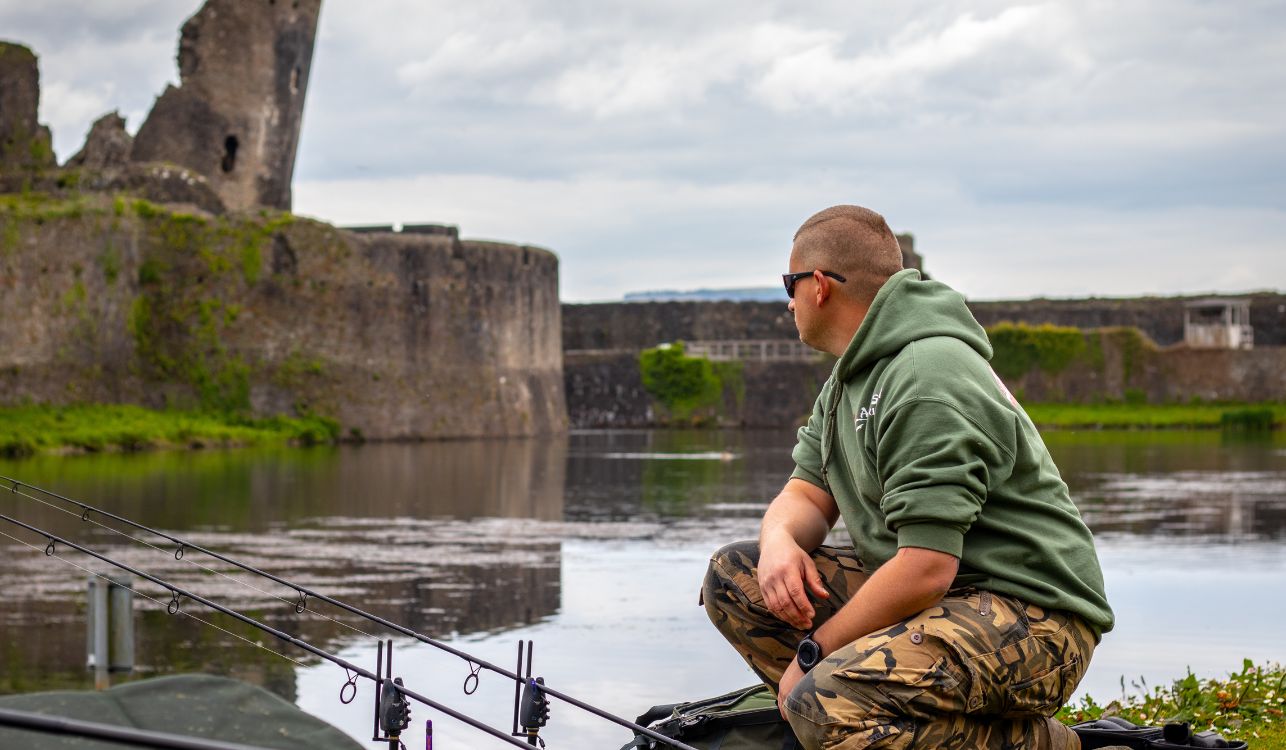
- Lakes around Caerphilly Castle
For a unique experience, the remains of a Norman fortress form a dramatic backdrop. These waters hold a mix of species including carp, tench and roach. Fishing alongside medieval stonework adds something genuinely different to a session. - White Springs Lakes, near Swansea
Widely regarded as one of the top fisheries in Britain, this location has multiple lakes and a wide variety of species, including specimen carp and perch. It’s well maintained, thoughtfully laid out and suits a range of approaches.
What stands out in South Wales is the balance between accessibility and tranquillity. You can find well-run fisheries that still feel tucked away, giving you that sense of escape, without sacrificing convenience.
Fishing lakes in Scotland
Fishing in Scotland leans more towards the wild and natural end of the spectrum. This is where lochs dominate and fly fishing comes into its own.
- Loch Leven
Known as is one of the standout names, particularly for trout anglers. Covering thousands of acres, it’s known for its fast-growing brown trout and the challenges they present. Fishing is done from boats, which adds another layer of skill and planning to the experience. - Greenhill Fishery in Dumfries and Galloway
A slightly more accessible option, with a mix of trout and carp across several ponds. Set in a quiet valley, it provides a relaxed setting, without losing its Scottish character.
In general, Scotland’s waters reward those who enjoy reading the conditions and adapting to the environment. It’s less about heavily stocked swims and more about working with the landscape.
Fishing lakes in Northern Ireland
In Northern Ireland, the fishing venues are often quieter and less crowded, which can make for a more relaxed and focused session.
- Conlig Lower Reservoir
A coarse fishery near Bangor covering around six acres offers year-round fishing for species such as roach, rudd, perch and skimmers. All fish are returned and methods like pole, feeder, float and spinning are commonly used. A DAERA coarse rod licence is required. - The River Maine, near Cullybackey
Another strong option, stretching for around 6.5 kilometres, it supports brown trout, salmon and dollaghan later in the season. Fishing runs from April through to October, with fly, worm and spinning methods permitted under certain conditions. It’s a more traditional setup, with a focus on moving water and reading the river properly.
Planning your fishing trip
A successful trip starts before you arrive at the water. Research is key, particularly when it comes to permits and licences. Beyond that, it’s about having the essentials covered, without overloading yourself.
Keeping gear organised and protected is essential, especially when moving between swims or dealing with wet ground. Many anglers rely on waterproof storage to keep their kit in good condition throughout the day.
Getting to the lake early can give you a clear advantage. You’ll have more choice of swims and a better chance to read the water before setting up. This is one of those skills that transforms guesswork into consistent results, such as looking for signs of movement, changes in depth, or features that might hold fish.
Adapting your bait and tackle to the conditions is just as important. Being willing to adjust your approach can turn a slow session into a productive experience. Patience is also part of the process. Even on well-stocked lakes, timing and positioning matter.
The best fishing lakes in the UK aren’t just about big names or record catches. Often, it’s the places that suit your style of fishing that deliver the most rewarding sessions. That might be a quiet corner of a commercial fishery, a windswept loch, or a hidden gem away from the crowds. Exploring different regions keeps things fresh and each trip adds something new.