
Horse rugs are never the easiest items to store. Bulky, heavy and awkward to fold, there can be a surprising number of them taking up space around the yard. Add mud, horsehair, moisture and the occasional mouse to the equation, and it’s easy to see why horse rug storage needs a little more thought than simply finding somewhere to put them.
© AI
A little preparation beforehand can make a significant difference to a rug’s condition when you need it again. A suitable container can provide protection against dust, damp and pests, whether you’re packing away seasonal rugs, or simply trying to bring order to a busy tack room.
Before getting into the practicalities of storage, start by looking at your collection. This is a useful opportunity to decide whether every rug needs to stay.
How do you store a horse rug?
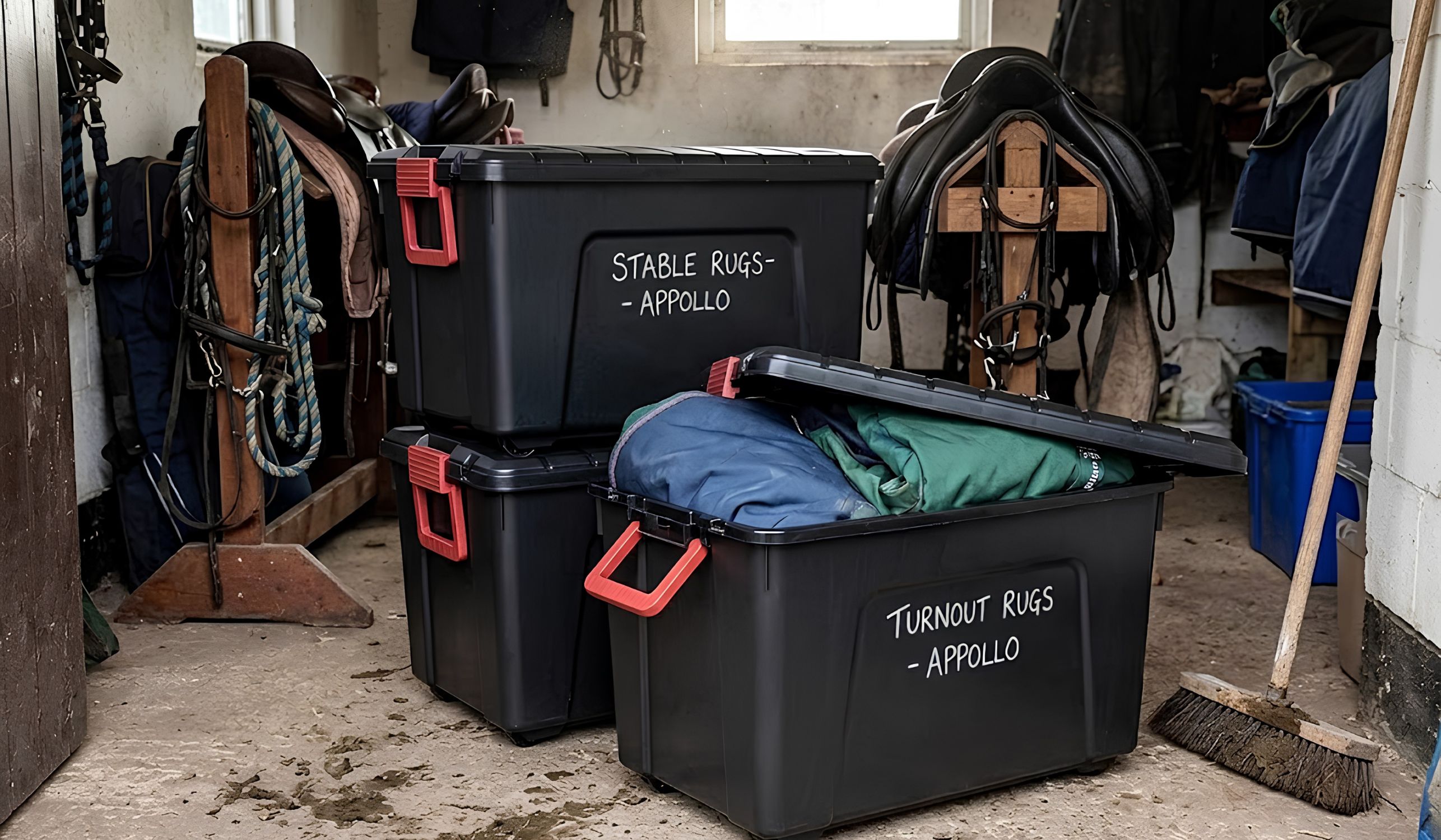
One of the simplest horse rug storage ideas is to group them according to how they are used. Keep stable, turnout, fly and exercise rugs grouped by type. This keeps similar rugs together and makes the collection easier to manage.
For larger collections, organising by size or horse can add another layer of order. If several horses have different requirements, labelling and grouping their rugs can prevent the inevitable rummaging through multiple boxes.
Label each rug with the horse's name and size, particularly if you have several that look similar. Ensure the label remains visible when the rug is folded. This turns a collection of bulky fabric into a manageable storage system. Avoid overfilling the container, as this can place unnecessary pressure on the rugs and make them harder to remove when needed.
Frequency of use matters too. Those that are used regularly throughout the year should be easy to reach, while heavier seasonal rugs can be moved into longer-term storage when not in use.
Check for damage first
Before you wash horse rugs, give each one a thorough inspection. Look over the outer fabric for tears, excess wear or damage that could become worse during washing. Check stitching, fastenings, straps and buckles. Dealing with small repairs at this stage means the rug can be put away ready for its next use.
Waterproof turnout rugs deserve particular attention. Damage to the outer fabric can affect their ability to keep the weather out, so repairs and reproofing should form part of the preparation. If a rug has become too worn to provide the protection it was designed for, keeping it indefinitely in a storage box simply takes up space.
Clean all rugs thoroughly
Putting a dirty rug into long-term storage is asking for trouble. Mud, sweat, hair and other organic material left on fabric can contribute to unpleasant smells and deterioration, particularly when combined with moisture.
Remove loose dirt and hair with a stiff brush. Pay particular attention to the withers, neck and tail flap, where dirt and hair can accumulate. When washing horse rugs, follow the manufacturer's care instructions. Some can be washed at home, while others are better suited to professional cleaning. Specialist rug cleaning services have commercial machines designed to cope with bulky items.
If washing at home, avoid overloading your machine, as it is less likely to clean effectively. A specialist washing bag can also help reduce the amount of horsehair reaching the machine. Use a non-biological or specialist horse rug detergent where appropriate. Standard household detergents are not necessarily suitable for technical or waterproof fabrics.
Once washed, rinse thoroughly, as residual detergent can affect the fabric and may cause problems when the rug is worn again.
Dry horse rugs completely
A rug can feel dry on the surface while retaining moisture inside its folded layers. Enclosing the moisture in a storage container creates perfect conditions for mould and mildew to form.
Allow rugs to air dry naturally in a well-ventilated area. Give thicker items plenty of time and check areas such as folds, straps and padding before putting them away. Storing rugs when they are completely dry and in a sealed horse rug storage box can also help prevent moisture from causing buckles and other metal fittings to rust.
Choosing the best storage solution
A good horse rug box should provide enough space without having to force bulky items inside. Plastic storage is a practical choice, as it’s durable and easy to clean. For larger collections, consider both the capacity and overall footprint of the box. There’s little benefit in choosing a large container if it’s awkward to move or takes up too much space when a smaller one would suffice.
Wheeled options can be particularly useful, making the containers easier to move when cleaning the tack room, reorganising the storage area, or accessing items stored further back.
The Iris airtight storage boxes from Solent Plastics are one option to consider. The Power Box XL 170-litre storage trunk and the 110-litre option are both available with wheels, making them practical for storing and moving bulky rugs.
The general environment matters as much as the container. A dry, well-ventilated tack room is often a practical location, keeping containers off damp floors and away from walls to minimise condensation.
Sheds, outbuildings and garages can also work well, provided they are protected from leaks and excessive damp. Check the storage area periodically so any problems can be addressed before they affect your rugs.
Make things easier for next season
Taking a little time to prepare your rugs properly before storing them can help avoid problems when they are needed again. With clean, dry rugs and a suitable storage environment, they are far less likely to come out smelling musty, covered in dust or bearing unwanted evidence of the local mouse population.