
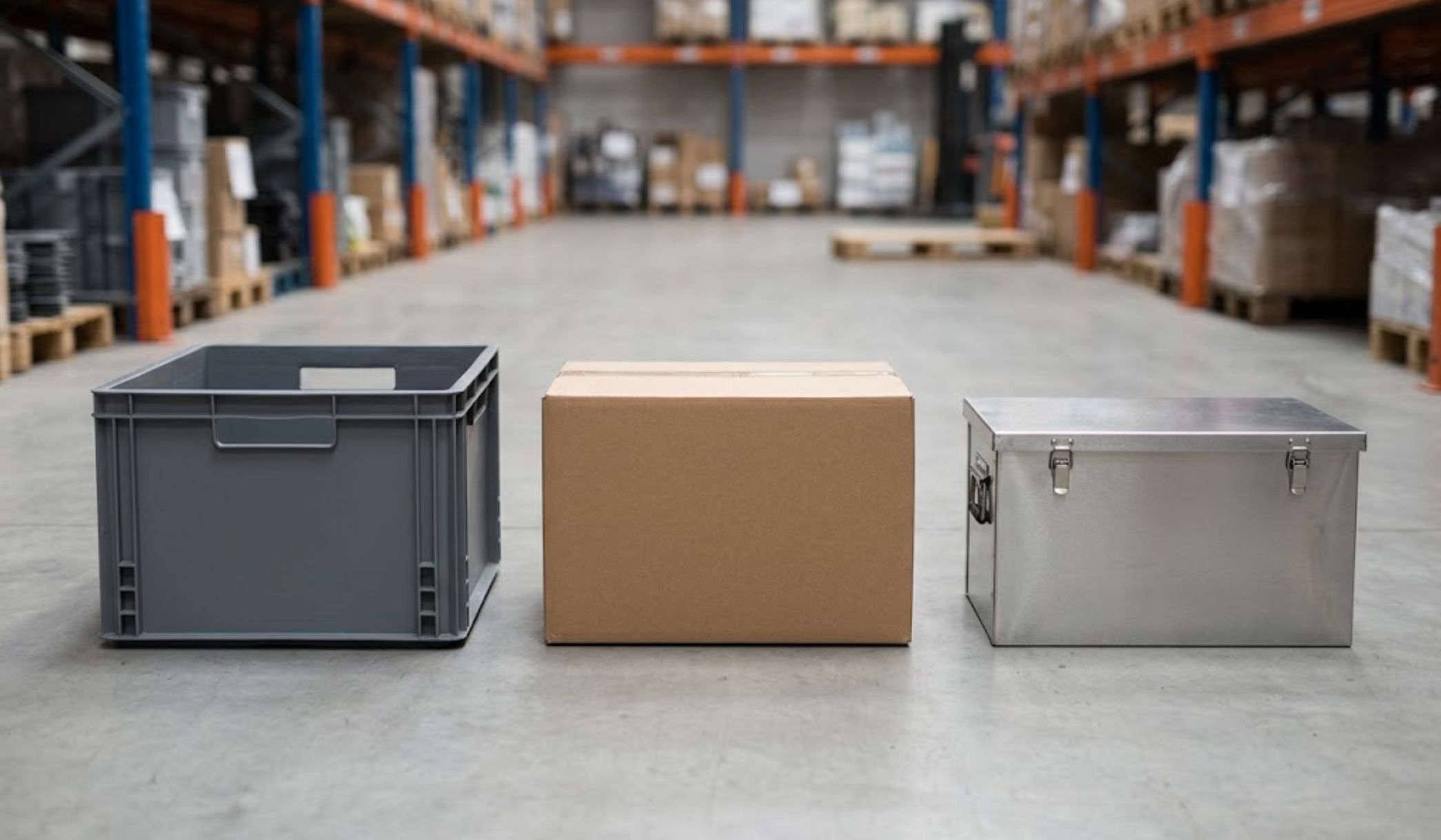
Plastic is often associated with environmental problems, particularly when single-use products create unnecessary waste or escape into the environment. However, replacing plastic with another material does not automatically produce a more environmentally friendly outcome. The overall impact depends on factors including manufacturing, transportation, product lifespan, opportunities for reuse and end-of-life disposal.
© AI / Solent Plastics
For businesses selecting storage, handling or packaging equipment, the priority is to find a material that meets operational requirements while balancing practical performance with environmental considerations.
Looking at the whole lifecycle
The UK Government's Resources and Waste Strategy for England places emphasis on keeping materials and products in use for longer through reuse, repair, remanufacturing and recycling.
A lifecycle comparison considers the raw materials and energy required for manufacturing, as well as the fuel used during transportation. Product weight can be particularly relevant when moving large quantities of equipment or packaging.
Plastic can perform well in this respect because it’s generally lightweight and offers useful strength and durability. A reusable container can be manufactured, transported and used repeatedly over many years, spreading the environmental impact associated with its production across a much longer working life.
Where plastic can make practical sense
Plastic is widely used for storage and handling because it combines properties such as low weight, moisture resistance and durability. Depending on the polymer and specification, it can also withstand certain chemicals and repeated handling.
Heavy-duty plastic storage boxes can be reused to store and transport components, finished products or equipment, reducing reliance on disposable packaging where repeated use is practical. In applications where hygiene is important, the suitability of a container for repeated cleaning is another practical consideration.
These advantages don’t automatically make every plastic product environmentally preferable. They demonstrate why the application matters.
Plastic, glass, metal and natural materials
There is no single material that’s automatically the best choice for every application.
Glass offers excellent barrier properties and is widely used for food and beverage applications, but its weight and susceptibility to breakage can make it less practical for frequent handling and transport.
Metal provides strength and a long service life, with recycling potential depending on the material and available facilities. Its overall environmental impact also depends on factors such as the production methods and resources required.
Paper and natural fibres may suit applications where moisture resistance and long-term strength are less critical. Where products need to withstand repeated use or challenging conditions, their performance over time becomes an important consideration.
Research published by the Food Standards Agency into alternatives to single use plastics in food packaging and production highlights the importance of assessing alternatives according to the specific application, rather than if replacing plastic always produces an environmental benefit.
Food storage requires careful consideration
A plastic container for food storage must be suitable for its intended use, meeting relevant food-contact requirements and withstanding the cleaning processes required for repeated use. Its lightweight construction, durability and resistance to moisture can make plastic a practical choice for commercial food storage and handling.
In Great Britain, plastic materials intended to encounter food are subject to specific legal requirements. Businesses should ensure that the containers they choose are suitable for their intended application, rather than assuming that all plastic products are appropriate for food storage.
How long does it take for plastics to biodegrade?
The time plastics take to break down varies according to their composition and the conditions they encounter. Most conventional petroleum-based plastics are not readily biodegradable, and some can persist in the environment for hundreds of years.
This persistence makes preventing plastic waste and managing products responsibly throughout their useful life particularly important.
How to Stop Plastic Pollution
Reducing plastic pollution involves preventing unnecessary waste, extending product life and ensuring materials are managed responsibly at the end of their use. For businesses, this means considering opportunities to reuse storage and handling products, reduce disposable packaging where practical and understand which materials can be recovered through available recycling services.
What plastics are recyclable?
Recyclability depends on the polymer, product design and available recycling infrastructure.
PET, HDPE and polypropylene are commonly recycled polymers, although acceptance depends on the product and available recycling infrastructure. Some rigid plastics are widely recyclable, while flexible and composite products can be more difficult to process.
The recycling symbol alone should not be treated as a guarantee that a particular item will be accepted through a specific collection service. Businesses should check the requirements of their waste contractor or local authority and consider the material specification when planning end-of-life management.
For commercial plastic products, keeping different materials separate and avoiding unnecessary contamination can make recovery more straightforward. Where recycled plastic storage boxes are suitable for the application, they can also provide an option for businesses looking to incorporate recycled materials into their storage and handling operations.
Making more informed material choices
Ultimately, choosing between materials requires looking beyond the initial purchase to consider how well a product performs in practice, how long it will remain fit for purpose and what happens when it is no longer needed. Taking time to assess these factors can help businesses make more informed purchasing decisions, selecting storage and handling solutions that meet operational needs while taking their wider environmental impact into account.