
Whether you're sailing, fishing, kayaking or pleasure boating, the marine environment is unforgiving. Saltwater, moisture and changing weather conditions can quickly take their toll on valuable equipment, making regular maintenance and secure storage essential for keeping it in reliable condition.
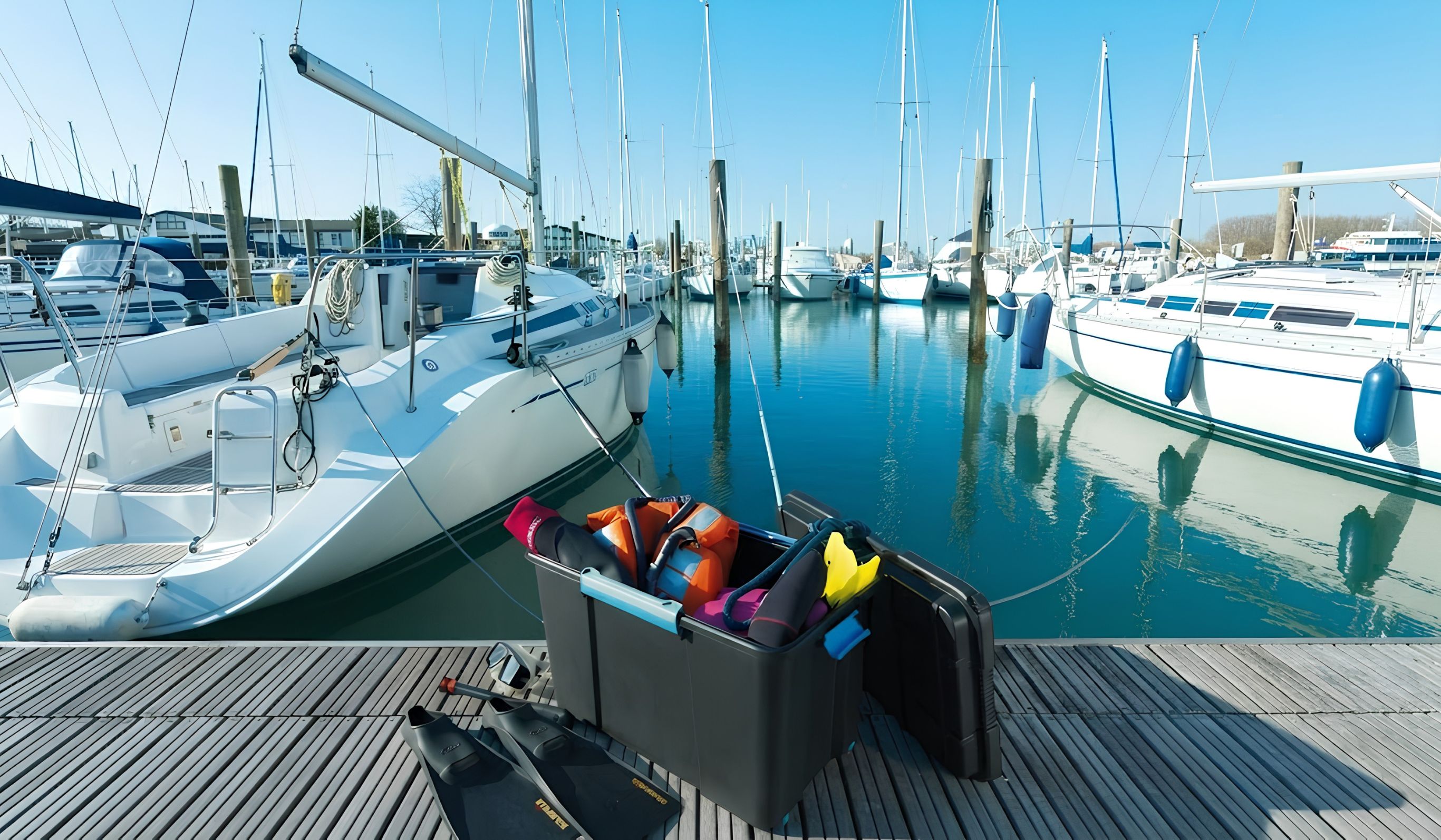
© Solent Plastics
Why is saltwater so damaging?
Saltwater presents a far greater challenge than freshwater because it accelerates the natural process of corrosion. Metals exposed to salty conditions begin to oxidise more rapidly, leading to rust, weakened components and reduced structural integrity. Saltwater also allows corrosion to spread more quickly across exposed surfaces.
The effects are not limited to metal parts alone. Salt crystals can also become trapped in moving parts, seals and electronic connectors, causing wear long after equipment has been used. Without thorough cleaning, these deposits continue attracting moisture, allowing corrosion to develop over time.
For anyone who spends time around the UK's coastline, understanding how these processes work is the first step towards protecting expensive equipment from unnecessary wear.
The hidden impact of salt and humidity
Many people assume equipment is at risk after being submerged in seawater. In reality, coastal air itself contains microscopic salt particles that settle on exposed surfaces. Combined with high humidity, these deposits remain active on surfaces, gradually affecting equipment even when it's not in use.
This is particularly noticeable during the winter months, when equipment may remain unused for extended periods. Left in damp lockers or poorly ventilated storage areas, items can quickly develop corrosion, mould and mildew despite never entering the water.
Electronics such as GPS units, handheld radios, tablets and cameras are especially vulnerable. Moisture can penetrate small openings, while salt residue gradually affects connectors, battery terminals and sensitive circuitry. Regular inspection helps identify early signs of corrosion before permanent damage develops.
Everyday marine equipment that needs protection
Safety gear such as lifejackets, flares, first aid kits and emergency beacons should always remain clean, dry and immediately accessible. Navigation equipment, including GPS devices, binoculars and marine electronics, benefits from protection against moisture and accidental knocks.
Fishing tackle also suffers from prolonged salt exposure, with reels, hooks, lures and tools particularly susceptible to corrosion if not rinsed properly. Similarly, ropes, paddles, buoyancy aids, wetsuits and helmets used for kayaking, canoeing and other water sports all require thorough drying before being stored. Even basic maintenance tools carried onboard can quickly develop rust if left exposed inside damp lockers.
Cleaning after every trip
One of the simplest and most effective ways to protect marine equipment is to establish a consistent cleaning routine after every outing.
Fresh water should always be used to rinse equipment exposed to seawater, removing salt deposits before they begin causing damage. Spending a few extra minutes rinsing and drying equipment can significantly extend its lifespan.
It's important not to overlook small details. Hinges, clips, buckles, reel mechanisms and adjustable fittings should all receive attention, as salt tends to accumulate in these areas. Soft brushes can help remove stubborn deposits without damaging protective finishes.
After rinsing, equipment should be thoroughly dried before being stored.
Preventing corrosion before it starts
Protective coatings, marine-grade lubricants and anti-corrosion sprays help reduce direct contact between metal surfaces and moisture.
Many stainless steel components offer excellent resistance to rust, while aluminium and titanium naturally withstand marine environments more effectively than untreated steel. Galvanised and anodised finishes also provide additional protection by creating durable surface barriers.
For equipment being stored over longer periods, moisture control becomes increasingly important. Desiccant packs, such as silica gel, help absorb excess humidity inside enclosed containers, while vapour corrosion inhibitors can create a protective atmosphere around sensitive metal components.
Making the most of onboard space
Storage space is always at a premium on a boat, so every compartment needs to work efficiently. Loose items rolling around lockers are more likely to become damaged, while poorly organised equipment can be difficult to find during emergencies.
Quality marine storage includes purpose-designed containers that keep essential items together while offering protection against spray, moisture and accidental impacts.
Protecting high-value equipment
Certain items require a higher level of protection than general onboard storage can provide. Cameras, drones, laptops, tablets, handheld GPS units, audio-visual equipment and surveying instruments all contain delicate electronics that are vulnerable to both moisture and physical impacts.
MAX waterproof cases provide an excellent solution for transporting and protecting valuable assets. Available in a wide range of sizes, the cases are rated to IP67, meaning they remain waterproof even when submerged to one metre for up to 30 minutes. The addition of high-quality customisable polyurethane foam inserts provides extra cushioning by securely supporting equipment, absorbing shocks and vibrations. Solent Plastics also offers custom foam interiors, bespoke labels, screen printing and colour production for organisations requiring tailored storage solutions.
These cases have become a trusted choice across military operations, offshore industries and professional film production, where equipment must continue performing reliably in extreme environments. For higher-value equipment, rigid protective cases and durable boat storage boxes offer a far greater level of security, while still providing excellent resistance to water and harsh weather conditions.
Extend equipment life
Looking after marine equipment doesn't need to be complicated. Regular cleaning, sensible maintenance and dependable storage solutions help keep everything from safety gear to expensive electronics in excellent condition, extending their lifespan and ensuring they're always ready for the next trip.