
Moving into your first home is an exciting milestone, but it also comes with a major challenge - figuring out where to put everything. Common difficulties include limited space, a lack of built‑in storage and the chaos of disorganised belongings. Tackling these issues head‑on with smart storage strategies can make daily life easier and help you feel more organised in your new home.
Playing a surprisingly large role in both home buying decisions and long‑term satisfaction; survey by Clever Closet revealed 77% of respondents believed modern homes lacked sufficient storage space, with 94% saying this was an “important” consideration when purchasing a property. In addition, more than half of all buyers think newer homes are notably smaller than older ones. These statistics demonstrate that without proper planning, a new home can feel cramped before you've even unpacked.
Storage solutions for your home should be viewed as an essential investment and not an afterthought.
Three major hurdles often confront first‑time homeowners: limited square footage, a lack of built‑in cupboards or wardrobes, and a tendency to accumulate and misplace possessions. Many modern builds skimp on cupboards, forcing residents to rely on external options like garages or even self‑storage units. One report found that 66% of new-build residents wanted more storage, and four in ten were already storing seasonal items in sheds or garages.
Without designated spaces, kitchens tend to be overcrowded with utensils, cookware and food items, while bathrooms often lack built‑in shelving or vanity units, leaving items scattered on countertops. In bedrooms, small wardrobes or a total absence of built‑in storage means clothes can pile up on chairs, or even in heaps on the floor. Garages can become essential overflow space, but they often end up disorganised.
A survey found that 46% of homeowners found their garage the hardest area to keep tidy and felt “embarrassed” if guests saw the chaotic interior.
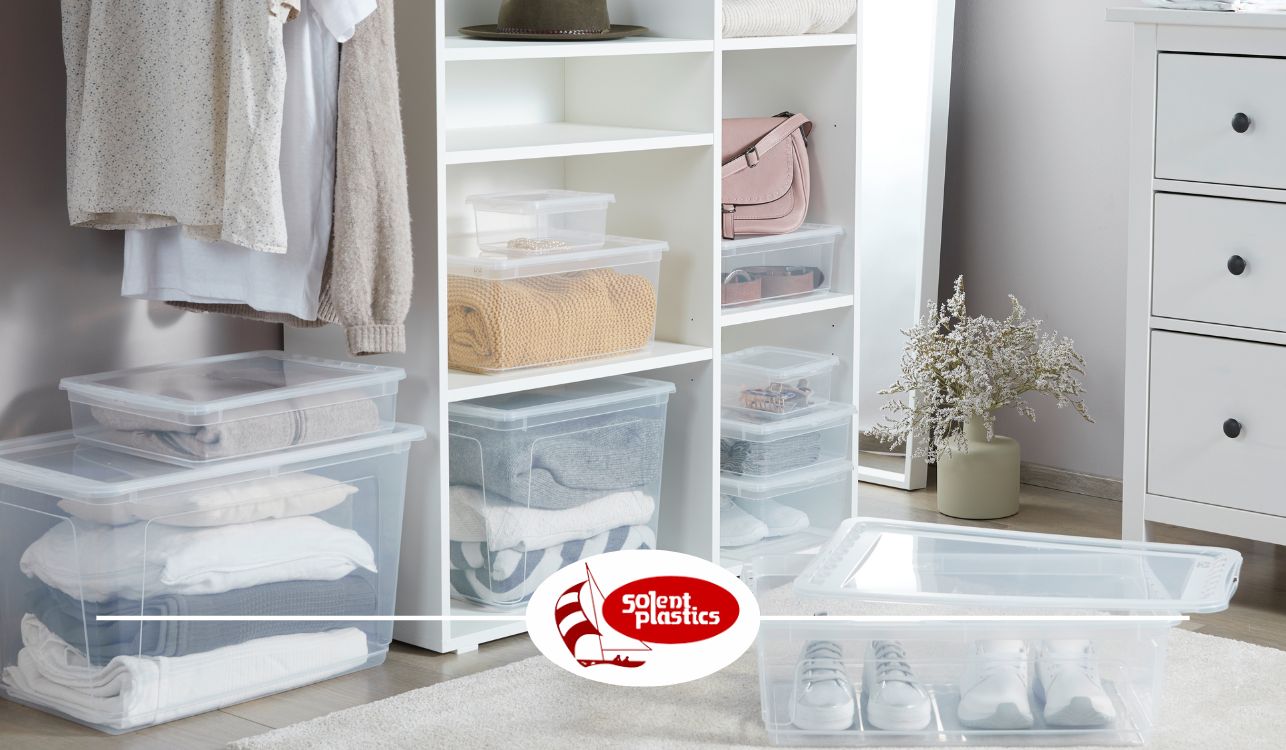
For bedrooms with limited wardrobe and cupboard space, plastic containers with lids offer a clever and discreet solution. Clear plastic underbed storage boxes will slide neatly into the available space, allowing you to see the contents with ease, while keeping dust at bay.
A perfect example, Solent Plastics’ 28-litre clear underbed storage box on wheels is designed to fit neatly beneath single, double and queen-sized beds. Ideal for storing shoes, bags, blankets, towels, toys and other household items, its elongated shape maximises otherwise unused space, offering a clutter-free alternative to traditional storage.
We also offer a range of heavy-duty containers that can be used for garage storage, including lockable storage boxes built for the demands of rigorous use. An essential choice for individuals needing secure, rugged and long-lasting storage, they are constructed from high strength polypropylene. Each unit has Europlex T locking handles, offering reliable, tamper-proof storage. Water-resistant seals around the lid provide additional defence against moisture and debris.
For items that require extra care, the 50-litre large Iris airtight clear plastic storage box offers premium protection against water, dust and moisture. Featuring an advanced hotmelt rubber seal, it achieves IP56 certification, meaning it offers substantial defence against both dust ingress and water. It’s ideal for storing keepsakes, important documents, sensitive electronics, or personal belongings in environments prone to humidity or damp.
Our 40-litre stackable modular storage drawer combines sleek design with practical functionality. With its spacious 40-litre capacity, this drawer system is ideal for storing a wide variety of items, from A4 paperwork and tools to clothing, shoes, laundry items and even children’s toys. The clear drawer front allows for quick identification of contents. Designed to stack securely, these modular drawers can be combined in various configurations, giving users the flexibility to build a custom storage solution tailored to their space.
Clear plastic containers also make great seasonal storage for Christmas and Halloween decorations, seldom‑used kitchen appliances, or extra towels and bedding.
Avoid common mistakes by creating a layout plan of the available space, decluttering before reorganising. Steer clear of cardboard boxes, which can soon deteriorate. Vertical storage systems, shelving racks and clearly labelled bins can dramatically improve access and safety in every space.
Before moving, sort through your belongings, asking yourself if you really need each item and where it would go in your new home. This makes unpacking more efficient and ensures you bring only what you intend to use or store. Consider donating to charity or discarding items destined to go into long‑term storage, as they often become forgotten clutter.
Label every box properly, not just “kitchen” or “bedroom”, to make unpacking easier. Go into greater detail, such as “kitchen utensils to go in the drawer” or “winter jumpers - wardrobe shelf”, so you know exactly what’s what. Good labelling removes guesswork later on and keeps storage purposeful.
Maximise vertical height throughout your home by installing shelving units that reach towards the ceiling, using wall hooks for everyday items such as cooking utensils or garden tools, for example. Convert narrow spaces into shelving or storage racks.
When placing belongings on shelving, heavier items should always go at the bottom to prevent accidents and reduce strain. Lighter items can be safely stored higher up if properly supported. Plan for stability and usability, especially if children will access storage areas. Put safety first.
Adopting thoughtful home organisation ideas early on prevents clutter from building up and ensures your home remains functional and welcoming.
Schedule small decluttering sessions every month or quarter, and reassess whether your storage setup still meets your needs. This proactive maintenance reduces stress and helps avoid the common feeling that you’ve outgrown your home too soon - a sentiment reported by many homeowners with cluttered spaces. For first‑time homeowners, the goal should be to create an environment where storage works for you, not against you. The transition into your first home can feel overwhelming: intelligent planning can turn chaos into calm.
Why is storage such a big deal?
Playing a surprisingly large role in both home buying decisions and long‑term satisfaction; survey by Clever Closet revealed 77% of respondents believed modern homes lacked sufficient storage space, with 94% saying this was an “important” consideration when purchasing a property. In addition, more than half of all buyers think newer homes are notably smaller than older ones. These statistics demonstrate that without proper planning, a new home can feel cramped before you've even unpacked.
Storage solutions for your home should be viewed as an essential investment and not an afterthought.
Top storage challenges
Three major hurdles often confront first‑time homeowners: limited square footage, a lack of built‑in cupboards or wardrobes, and a tendency to accumulate and misplace possessions. Many modern builds skimp on cupboards, forcing residents to rely on external options like garages or even self‑storage units. One report found that 66% of new-build residents wanted more storage, and four in ten were already storing seasonal items in sheds or garages.
Without designated spaces, kitchens tend to be overcrowded with utensils, cookware and food items, while bathrooms often lack built‑in shelving or vanity units, leaving items scattered on countertops. In bedrooms, small wardrobes or a total absence of built‑in storage means clothes can pile up on chairs, or even in heaps on the floor. Garages can become essential overflow space, but they often end up disorganised.
A survey found that 46% of homeowners found their garage the hardest area to keep tidy and felt “embarrassed” if guests saw the chaotic interior.
Smart storage solutions homeowners should consider
For bedrooms with limited wardrobe and cupboard space, plastic containers with lids offer a clever and discreet solution. Clear plastic underbed storage boxes will slide neatly into the available space, allowing you to see the contents with ease, while keeping dust at bay.
A perfect example, Solent Plastics’ 28-litre clear underbed storage box on wheels is designed to fit neatly beneath single, double and queen-sized beds. Ideal for storing shoes, bags, blankets, towels, toys and other household items, its elongated shape maximises otherwise unused space, offering a clutter-free alternative to traditional storage.
We also offer a range of heavy-duty containers that can be used for garage storage, including lockable storage boxes built for the demands of rigorous use. An essential choice for individuals needing secure, rugged and long-lasting storage, they are constructed from high strength polypropylene. Each unit has Europlex T locking handles, offering reliable, tamper-proof storage. Water-resistant seals around the lid provide additional defence against moisture and debris.
Protect valuable items
For items that require extra care, the 50-litre large Iris airtight clear plastic storage box offers premium protection against water, dust and moisture. Featuring an advanced hotmelt rubber seal, it achieves IP56 certification, meaning it offers substantial defence against both dust ingress and water. It’s ideal for storing keepsakes, important documents, sensitive electronics, or personal belongings in environments prone to humidity or damp.
Our 40-litre stackable modular storage drawer combines sleek design with practical functionality. With its spacious 40-litre capacity, this drawer system is ideal for storing a wide variety of items, from A4 paperwork and tools to clothing, shoes, laundry items and even children’s toys. The clear drawer front allows for quick identification of contents. Designed to stack securely, these modular drawers can be combined in various configurations, giving users the flexibility to build a custom storage solution tailored to their space.
Clear plastic containers also make great seasonal storage for Christmas and Halloween decorations, seldom‑used kitchen appliances, or extra towels and bedding.
Avoid common mistakes by creating a layout plan of the available space, decluttering before reorganising. Steer clear of cardboard boxes, which can soon deteriorate. Vertical storage systems, shelving racks and clearly labelled bins can dramatically improve access and safety in every space.
Practical steps before and during your move
Before moving, sort through your belongings, asking yourself if you really need each item and where it would go in your new home. This makes unpacking more efficient and ensures you bring only what you intend to use or store. Consider donating to charity or discarding items destined to go into long‑term storage, as they often become forgotten clutter.
Label every box properly, not just “kitchen” or “bedroom”, to make unpacking easier. Go into greater detail, such as “kitchen utensils to go in the drawer” or “winter jumpers - wardrobe shelf”, so you know exactly what’s what. Good labelling removes guesswork later on and keeps storage purposeful.
Plan for heavy vs light belongings
Maximise vertical height throughout your home by installing shelving units that reach towards the ceiling, using wall hooks for everyday items such as cooking utensils or garden tools, for example. Convert narrow spaces into shelving or storage racks.
When placing belongings on shelving, heavier items should always go at the bottom to prevent accidents and reduce strain. Lighter items can be safely stored higher up if properly supported. Plan for stability and usability, especially if children will access storage areas. Put safety first.
Adopting thoughtful home organisation ideas early on prevents clutter from building up and ensures your home remains functional and welcoming.
Declutter regularly
Schedule small decluttering sessions every month or quarter, and reassess whether your storage setup still meets your needs. This proactive maintenance reduces stress and helps avoid the common feeling that you’ve outgrown your home too soon - a sentiment reported by many homeowners with cluttered spaces. For first‑time homeowners, the goal should be to create an environment where storage works for you, not against you. The transition into your first home can feel overwhelming: intelligent planning can turn chaos into calm.