
The truth is that camping can be one of the least stressful holidays you’ll ever take: no airport queues, no luggage limits and no hotel meals to book. However, when you’re packing for babies, toddlers, school-age kids and even teenagers, it can sometimes feel like you’re moving house!
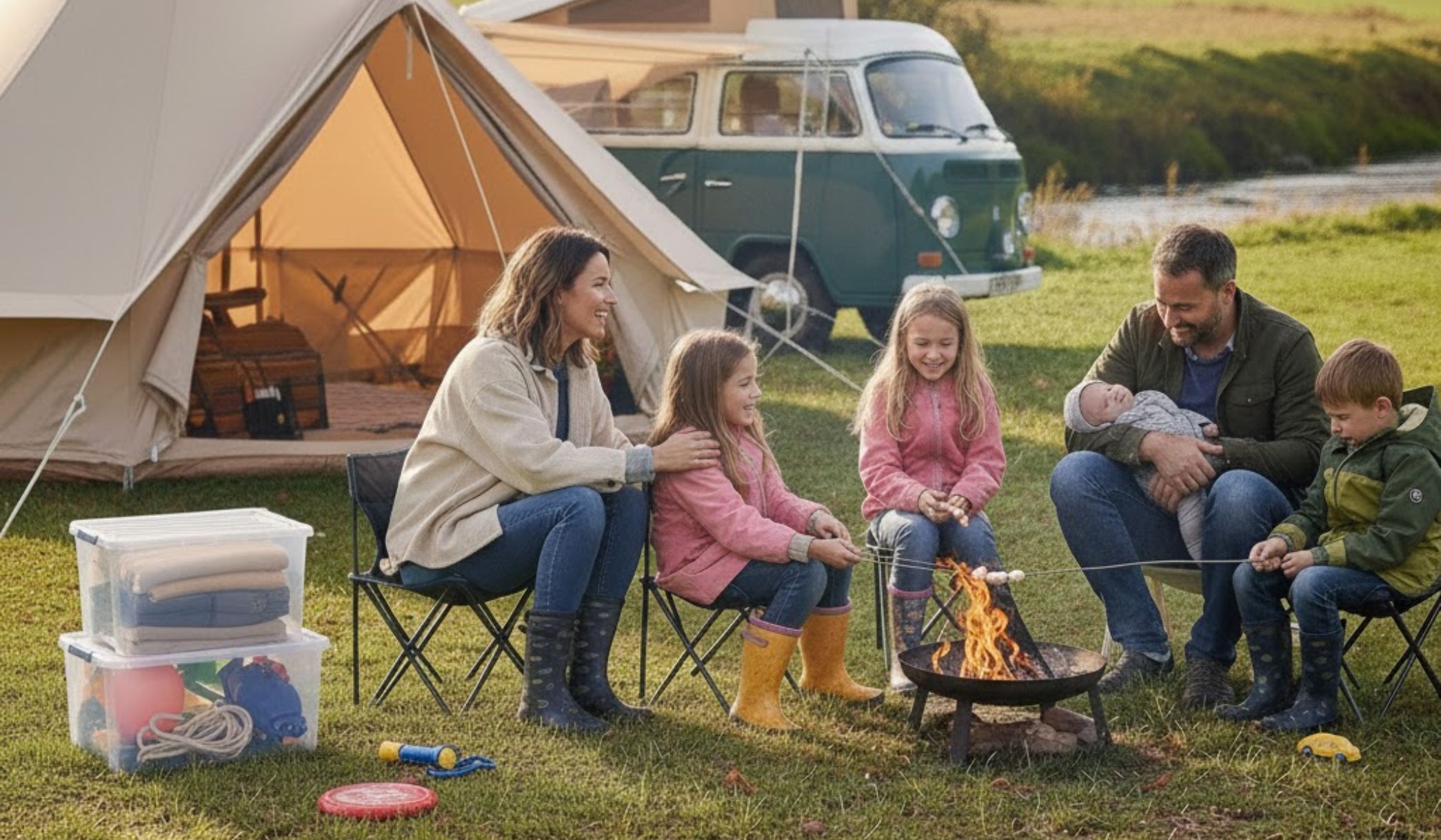
(Image generated by AI)
The secret isn’t packing more; it’s packing smarter. Recent travel research suggests most UK families start planning summer holidays around three to five months in advance, but despite careful planning, common items still get forgotten. Parents regularly admit to leaving behind baby wipes, torches, coffee, towels, or even the tent itself! That’s where a detailed camping checklist and clever storage systems make all the difference.
General camping essentials
Every family setup is different. You might be tent camping with air mattresses, touring in a motorhome or towing a travel trailer, but the principles stay the same: comfort, food, clothing and safety come first.
Sleeping gear should include appropriate sleeping bags, pillows that feel like home, thermal layers for unpredictable British nights and extra blankets. Even in July, UK temperatures can dip below 10°C overnight.
A clear list of camping supplies avoids last-minute supermarket dashes. Many families use two main bins: a gear bin and a pantry bin. A sturdy airtight box for dry goods is ideal when it comes to food storage for camping. It will keep animals and creepy-crawlies out and ingredients dry. Everything from spices and cooking oil to cereal, pasta and snacks can stay fresh inside.
Coolers with frozen water bottles double as ice packs and emergency drinking water. Simple no-cook options such as cereal, yoghurt, wraps and fruit are perfect when children wake up hungry before you’ve boiled the kettle.
Clothing should cover all weather possibilities. In the UK, it’s common to experience sunshine, drizzle and wind in a single afternoon. Waterproof jackets, wellies, swimwear and sun hats often all get used on the same trip.
Safety essentials include a first aid kit, insect repellent, sunscreen, torches or headlamps for late-night toilet trips, and plenty of hand sanitiser. These are true camping essentials for kids and adults alike.
Once you’ve thought through the key items and created your own camping family checklist, stress soon melts away.
Babies: comfort, cleanliness and familiarity
Camping with a baby for the first time can feel daunting. Babies up to 12 months thrive on routine and familiarity, so your goal is to recreate small comforts from home.
Standard baby wipes or antibacterial biodegradable wipes are invaluable when you’re dealing with muddy picnic tables and sticky highchairs and fingers. Many parents admit wipes are the one item they always forget, so keep a permanent pack in your camping gear.
Extra blankets add warmth during cool evenings and provide a familiar scent and texture in a new environment. Layering is much easier than trying to warm up a chilly baby at midnight.
Nappy bags help keep your pitch hygienic. Used nappies should go straight into a bag and then into campsite bins, rather than lingering near your tent or campervan. A baby monitor can offer peace of mind, providing a familiar sense of security.
Aside from the obvious essentials, consider a small bag packed specifically for easy access in the car. A change of clothes, a blanket, a favourite soft toy and a portable white noise machine can make transitions smoother. Camping with children starts gently when they’re babies, so keep expectations low and enjoy those first rural strolls and naps.
Toddlers and early school-age children
Young children bring boundless energy to a campsite. Toddlers want to explore, preschoolers ask endless questions and early school-age kids crave independence. First aid kits are essential at this stage. Scraped knees, splinters and mystery bumps are part of the adventure. A basic kit with plasters, antiseptic wipes and children’s pain relief will handle most situations.
Sun protection is critical. According to UK health data, children’s skin is particularly vulnerable to UV damage, even on cloudy days. Pack sunscreen, hats and lightweight long sleeves. Insect repellent is another camping essential for kids, especially near lakes or woodland. If your child reacts strongly to bites, bring your preferred soothing treatment.
Torches and headlamps can turn nighttime into an adventure. Kids love having their own torch for toilet trips or bedtime stories in sleeping bags. Entertainment matters too. Outdoor games such as football, frisbee or kite flying help burn off energy. Many campsites have designated play areas, but always check site rules before setting up a match near neighbouring tents.
Indoor backup options are equally important. Board games, cards, colouring books and a simple scavenger hunt can transform a rainy afternoon. Studies show that unstructured play boosts children’s creativity and resilience - camping offers this in abundance!
Practical extras make life smoother: spare socks are invaluable, child-friendly cutlery and dinnerware encourage independence and high-quality pillows prevent overtired meltdowns the next day. Footwear should match activities. Wellies for wet grass, sandals for the shower block, sturdy trainers for woodland walks and beach shoes if you’re camping along the coast.
When it comes to camping storage, giving each child an airtight lidded box for their own torch, water bottle and bedtime book fosters responsibility.
Teenagers: independence and involvement
Teenagers may approach family camping with mixed enthusiasm. The key is involvement. Encourage them to help with packing and create their own list of camping supplies. Headphones are easy to forget, but important for downtime. Portable power banks ensure mobile phones stay charged for photos and messaging friends.
Bikes and scooters offer independence, especially on larger sites, or in areas with safe cycling routes. Exploring independently, within agreed boundaries, builds confidence. Comfort matters for teens just as much as toddlers. Decent sleeping mats, warm hoodies and a quiet space to retreat to can transform their experience. Books, sketchpads or a simple journal can offer calm moments away from screens.
Surveys show teenagers who spend time in nature report lower stress levels and improved mood. Give them responsibility; let them help cook, or manage the campfire, as ownership builds pride.
Smart camping storage
One of the biggest stress reducers for camping with children is organisation. Clear plastic boxes allow you to see exactly what’s inside. Tents, tarpaulins, sleeping bags and chairs stay separate, but smaller items can live in core clear containers that can also be used for future trips.
Once you’ve sorted your storage ideas for camping, the freedom is incredible. Camping gives parents slower mornings, simpler evenings and conversations around a flickering fire. With a little preparation, your next holiday will feel exciting, rather than overwhelming.