
With Christmas rapidly approaching, parents start hunting for the latest must-have toys, while grandparents reminisce about simpler times. It’s during the season of giving that memories of popular toys of the 70s come rushing back, with the nostalgia of old television adverts and the unmistakable excitement of Christmas morning.
A surprising number of forgotten favourites have become prized treasures among toy collectors, so let’s step back into that wonderful world and rediscover some of the kids’ crazes that shaped a decade.
Popular toy makers of the 1970s
The many retro toys from the 70s shaped the playtime of an entire generation, their appeal lasting long after Christmas. While other brands created superheroes and laser battles, Fisher-Price took a whimsical detour into everyday life. Their Adventure People arrived as miniature reminders that being a park ranger or TV reporter could be just as exciting as fighting intergalactic supervillains. These toys encouraged children to recreate the world around them with surprising realism and charm.
Meanwhile, founded in 1932, LEGO continued its ascent. By the mid-70s, the colourful bricks were becoming a cultural staple, winning Toy of the Year in 1974 and 1975. In 1979, the beloved Legoland Space sets won the accolade again. By the end of the decade, LEGO had cemented itself as one of the most popular toy makers of the 70s.
Hot Wheels and Matchbox cars screeched through British living rooms - toy car sales soared, fuelled by a growing fascination with motorsport. Founded in 1953, Matchbox faced turbulence from fierce competition, but children remained loyal racers on improvised living room tracks, keeping the brand afloat.
For girls, Barbie reigned supreme. She wasn’t just a doll but a cultural icon, her fashion evolving with the decade’s changing styles. Sindy also shone, winning Toy of the Year twice. Even as new dolls appeared such as Disco Girl, Chelsea Girl and Daisy the original favourites continued to dominate, showing how deeply rooted doll play was across generations.
Keeping the memories safe
While the toys themselves have changed, the need to keep them safe certainly hasn’t. Many households today, especially those rediscovering or collecting toys and games from the 70s, turn to reliable plastic storage for toys to preserve their childhood favourites. Protecting fragile vintage pieces, organising growing toy collections and keeping modern playrooms neat, even during the festive chaos, is important not only for your sanity, but also to make sure they increase in value.
Charming classics we all remember
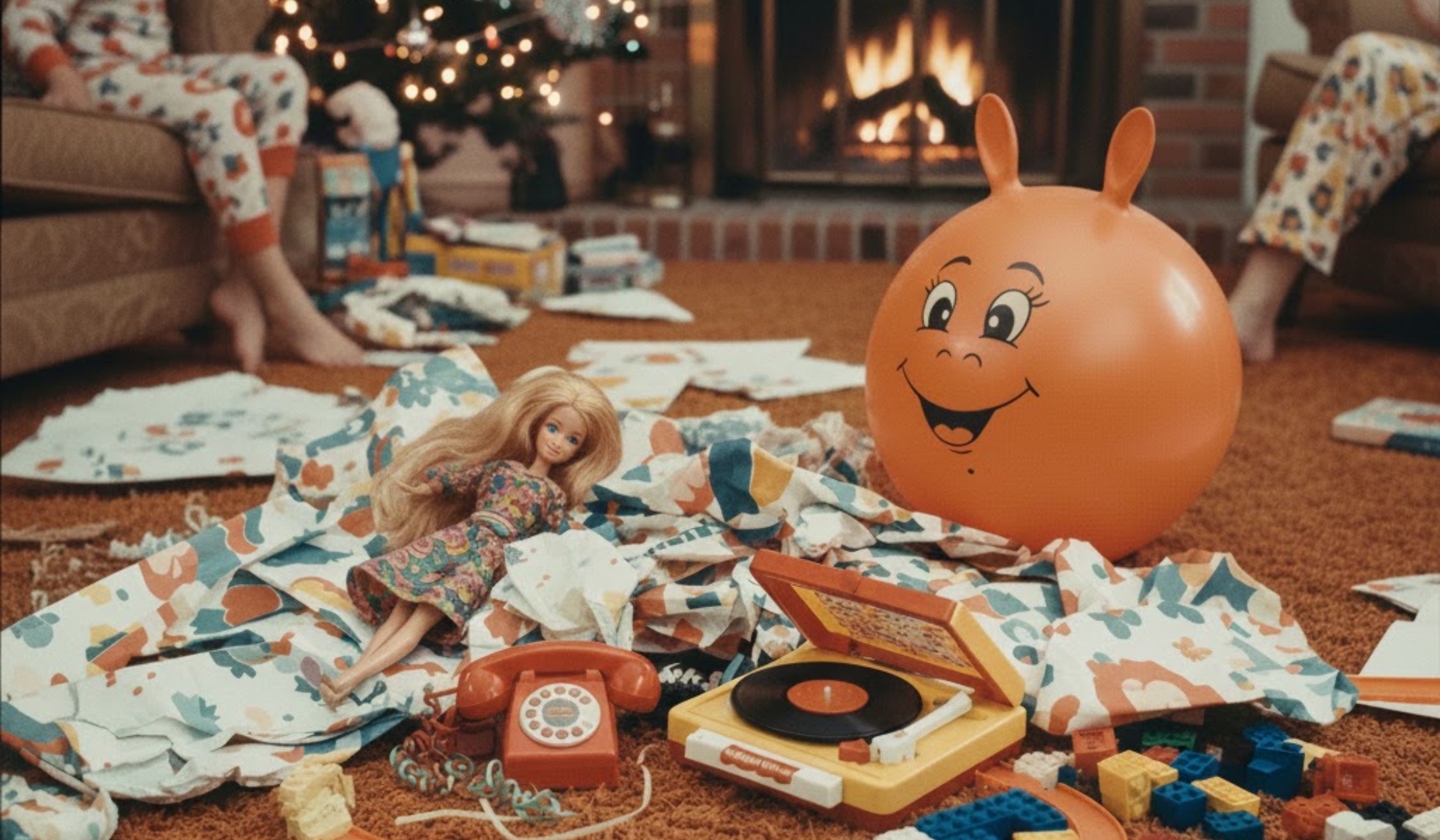
One of the most unforgettable toys of the 1970s was the Fisher-Price Record Player. It wasn’t a true phonograph, of course, but for a child, it felt indistinguishable from the grown-ups’ version. Kids across the UK loved the plastic records marked with bumpy grooves that played nursery classics like Mary Had a Little Lamb or Twinkle, Twinkle Little Star. Although simple, it sparked a love of music for countless tiny tots.
Oh, and what about the Fisher-Price Chatter Telephone? This smiling rotary phone was dragged across every carpeted surface, its wobbly eyes, clacking wheels and jingly dial a genuine source of joy. Looking back, it seems amazing that it mirrored the phone obsession the world would experience decades later.
Nearly everyone had a See ‘n’ Say, the pull-string game of animal noises. The familiar phrase, “The cow says moo!” echoed through millions of homes. By some estimates, more than ten million units were sold globally throughout the 70s and early 80s.
Trends, crazes and playground legends
The Space Hopper bounded into British gardens in 1971, becoming an instant craze. Children sat on a large inflatable rubber ball, gripped the handles and bounced around at top speed. That same year, Klik Klaks (or Clackers) hit the playground. Featuring two hard acrylic balls attached to a string with a small metal handle; you held the handle, swung the balls so they clicked together above and below your hand, creating an unmistakable rhythmic sound.
When done well, they clacked at impressive speed, becoming a skills challenge, but they were also notorious for being a little dangerous. The balls could smack wrists, knuckles or even faces if the rhythm went wrong - they were banned from many schools, making them even more legendary in children’s eyes.
The simple pleasure of blowing bubbles attracted record numbers of kids too, with an estimated seven million units sold in their first year.
On the more strategic side, Mastermind was launched in 1973 and quickly became a household favourite, riding a wave of growing interest in educational games. Parents loved them for their intellectual challenges, while children enjoyed the thrill of cracking coded colour sequences.
Board games got in their stride as well: Parker Brothers’ Monopoly celebrated its 40th anniversary in 1975 and Waddingtons’ Cluedo reached 25, keeping kitchen tables busy long after dinner. Towards the end of the decade, toys became more electronic as blinking LEDs and space-age sounds captivated young minds. Radio controlled cars and electronic novelties skyrocketed in popularity, reflecting broader technological shifts across British culture.
Toys that became collectors’ treasures
Many 1970s retro toys that once cost just pocket money are now worth hundreds or even thousands of pounds to dedicated collectors.
Original LEGO space sets from 1979 fetch impressive prices of up to £5,000 when boxed and complete. Once common Fisher-Price toys are now highly collectible, especially items still in working order with bright, unfaded colours. Early Hot Wheels and Matchbox cars, particularly limited-run models, have become some of the most desirable miniature items in the collectors' market. Rare Hotwheels’ Redline cars from the early 1970s can be valued at up to £1,800, such as the 1972 Redline Rumblers Bone Shaker.
Early Sindy dolls, especially Toy of the Year editions, now command significant value. A 1971 Trendy Girl Walking Sindy with a twisting waist sold at auction for a record £820 in 2004. Any original Star Wars figure from 1978 (the year they first hit shelves) has become legendary. Some rare figures have sold for five-figure sums, such as the 1978 Kenner Star Wars 12 Back-A Jawa with vinyl cape, still in its unopened box in mint condition, selling at £26,000 on eBay.
Which 1970s toys are still loved today?
LEGO remains a universal favourite, now boosted by animated films, Legoland theme parks and intricate sets. Perhaps surprisingly, considering modern technology, the Fisher-Price Chatter Telephone continues to sell, having been updated, but remaining recognisable.
Many adults now buy these classics for themselves. They are emotional time capsules - reminders of Christmas mornings filled with the excitement of tearing wrapping paper, watching festive films, eating too much and the magical feeling that anything could happen.