
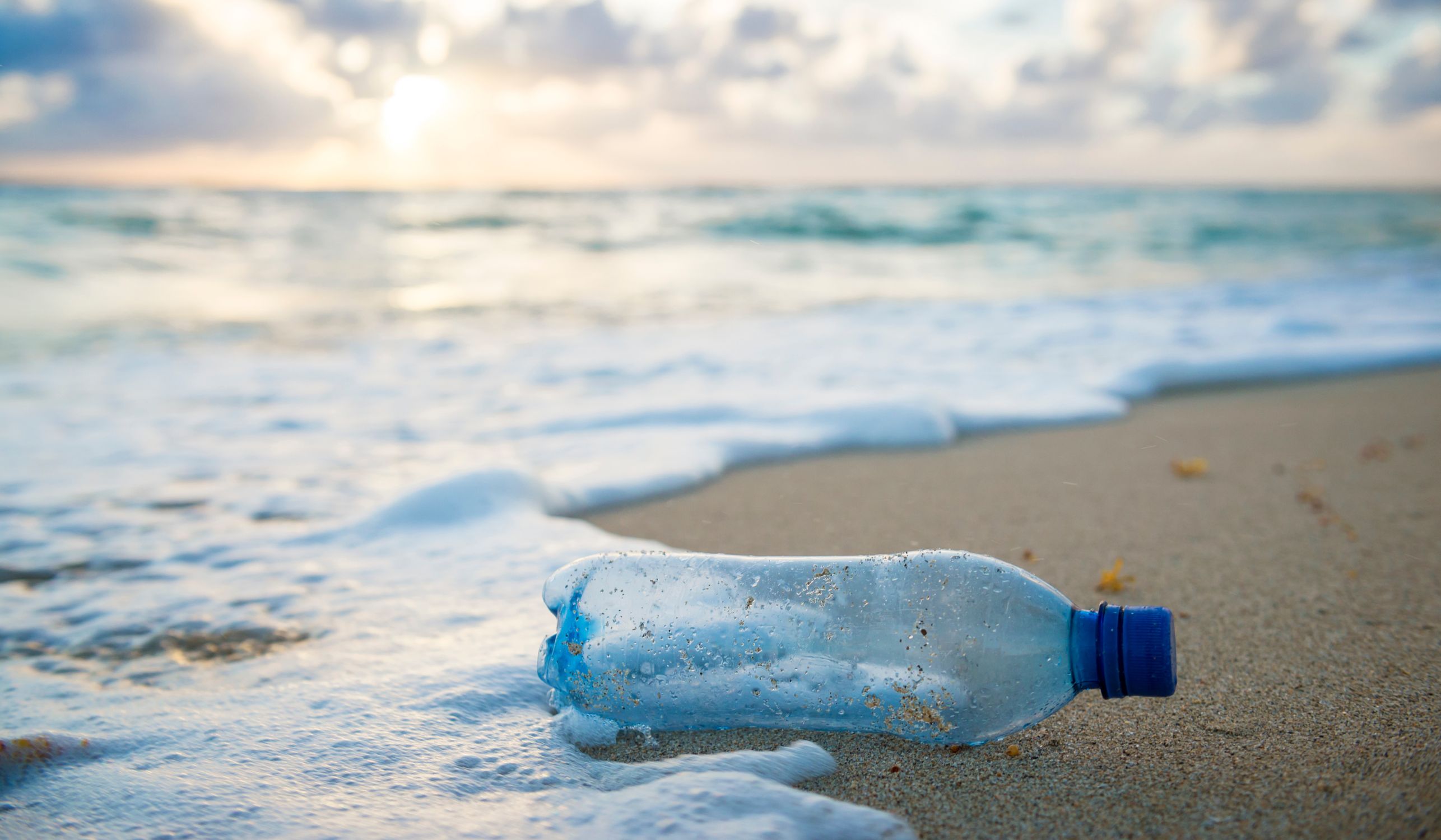
© lazyllama / Shutterstock.com
Now, in laboratories from Yale to Kew, researchers are exploring whether certain species could also become part of a credible plastic pollution solution. For those of us interested in environmental science and the health of our seas and soils, the idea of a fungus that eats plastic feels almost too good to be true, but the science behind the process is both fascinating and plausible.
Hidden kingdom beneath our feet
Fungi represent one of the most diverse yet understudied kingdoms of life. According to a recent report from the Royal Botanic Gardens, Kew, scientists have formally described only about 10% of the estimated 2.5 million fungal species believed to exist globally, leaving roughly 2.25 million species unknown.
Some 200 researchers contributed to Kew’s findings, warning that many species may already be at risk from habitat loss, pollution, and climate change. Some could vanish before we even identify them. For those concerned with biodiversity and sustainable development, this is more than an academic study. Hidden among unknown species could be organisms capable of transforming waste management, medicine, or soil restoration.
Fungi exist almost everywhere: forest floors, grasslands, peat bogs, marine sediments, and even extreme environments such as Antarctic soils. They form symbiotic relationships with plant roots, regulate nutrient cycling, decompose organic matter, and influence carbon storage. In marine ecosystems, fungi are increasingly recognised for breaking down organic debris and interacting with microplastics.
This ecological diversity is why fungi are so relevant to environmental problem solving. They have evolved over hundreds of millions of years to digest complex, resistant materials. Plastic, in evolutionary terms, may be their next challenge.
Familiar fungi with remarkable roles
Before exploring plastic degrading species, it helps to consider fungi we already know. Agaricus bisporus, the common button mushroom sold in UK supermarkets, is cultivated globally at millions of tonnes per year. Ecologically, it’s a saprotroph, feeding on decaying organic matter. In doing so, it releases nutrients like nitrogen and phosphorus back into the soil for plant uptake. Commercial cultivation often uses agricultural by-products such as straw and manure, showing a circular use of waste.
Another well studied group is Trichoderma, a soil dwelling genus widely used in agriculture and biotechnology. Trichoderma species antagonise plant pathogens, producing enzymes like cellulases and chitinases that degrade other fungi’s cell walls. Some strains also stimulate root growth and enhance nutrient uptake, supporting soil health and reducing chemical inputs.
Both Agaricus and Trichoderma illustrate fungi’s core ecological strength: enzymatic versatility. They secrete extracellular enzymes that dismantle tough polymers like cellulose. Lignin, found in wood, is particularly complex and resistant, so fungi’s ability to routinely decompose it hints at its potential to tackle synthetic polymers.
Plastic pollution: the search for biological solutions
Plastic production has risen dramatically over the past century. In Britain, plastic accounted for less than 1% of waste in 1960. By 2012, it represented around 12%, with landfill capacity under strain. Globally, annual plastic production exceeds 350 million tonnes, and a significant proportion ends up in the oceans.
Microplastics have now been detected in marine organisms, drinking water and even human blood. This is not simply about litter; it’s about systemic material flows and planetary health. Under the circumstances, recycling and the use of reusable plastic remain essential.
Recycling conserves resources such as petroleum and reduces energy demand compared with producing virgin polymers. Solent Plastics is an environmentally conscious UK supplier, emphasising responsible disposal, recycling infrastructure and the use of recycled materials in our product lines. We also follow broader commitments to sustainable practices, as recycling alone is not a complete answer. Many plastics degrade slowly, fragmenting into smaller particles rather than fully mineralising. This is where biological approaches enter the equation.
A fungus that eats plastic
One of the most widely discussed plastic degrading species of fungi is Pestalotiopsis Microspora. First highlighted in research conducted by students at Yale University in 2011, this endophytic fungus was isolated from the Ecuadorian rainforest. It demonstrated the ability to degrade polyurethane, a polymer commonly used in foams, adhesives and coatings.
What makes Pestalotiopsis Microspora especially intriguing is its capacity to break down polyurethane under both aerobic and anaerobic conditions. This suggests potential applications in landfill environments, where oxygen levels are often low.
At a biochemical level, fungi like Pestalotiopsis deploy extracellular enzymes such as laccases, peroxidases and esterases to attack polymer chains. Laccases are capable of oxidising a broad range of phenolic substrates, while peroxidases use hydrogen peroxide to catalyse oxidative reactions. Esterases break the chemical bonds that are common in certain synthetic polymers.
Laboratory studies have shown measurable mass loss and structural alteration in polyurethane samples exposed to fungal cultures, including surface pitting and erosion consistent with enzymatic degradation. However, it’s important to remain realistic. Most studies to date have been conducted under controlled laboratory conditions. The rate of degradation is often slow compared to industrial waste volumes. Scaling up from petri dishes to municipal waste systems presents significant engineering and regulatory challenges.
Drawing parallels with natural decomposition
To understand the concept of a fungus eating plastic, it helps to compare the process with wood decay. White-rot fungi, for example, degrades the lignin polymer using oxidative enzymes like those needed for plastic breakdown. Lignin’s irregular, cross linked structure has often been compared to synthetic polymers in terms of complexity.
In forests across Wales and Scotland, grasslands rich in waxcap fungi demonstrate how specialised species can thrive in ecological niches. Brightly coloured waxcaps and the striking Laetiporus Sulphureus, commonly known as Chicken of the Woods, illustrate the extraordinary metabolic capabilities of fungi. While these species are not known for plastic degradation, they show the diversity of enzymatic systems evolved in nature.
The same fundamental principle applies to plastic degrading fungi. Faced with a carbon source, certain species appear capable of adapting their metabolic pathways. Through mutation, gene regulation and horizontal gene transfer, fungi may refine their ability to break down synthetic substrates.
Beyond degradation, fungi are also inspiring material substitution. Mycelium, the root-like network of fungal filaments, can be cultivated on agricultural waste to create lightweight, compostable materials. In the UK, companies such as Biohm grow mycelium on food waste and sawdust to produce insulation panels for the construction sector. These panels can be composted at end of life and are pH neutral. Mycelium has also been developed into leather-like materials, providing vegan-friendly alternatives to animal derived products.
While mycelium materials do not directly solve the problem of existing plastic waste, they contribute to broader solutions for plastic pollution by reducing reliance on conventional polymers.
Benefits and the road ahead
Potential benefits of a fungus that eats plastic include low energy degradation processes and the possibility of integrating fungal treatment into existing waste management systems.
However, degradation rates are variable and often slow, as some plastics, such as polyethylene, are more resistant to enzymatic attack. The key takeaway is that biological innovation should complement and not replace existing reuse and recycling strategies. It’s fair to say the next breakthrough plastic pollution solution may be hidden in an overlooked grassland, a marine sediment sample, or a rainforest canopy.